Aluminium is one of the most popular metals in modern manufacturing — lightweight, naturally corrosion-resistant, and easy to machine and form. Yet despite its inherent qualities, raw aluminium often needs a protective and decorative finish to meet the demands of real-world applications. Powder coating has become the go-to finishing method for aluminium parts, offering a durable, attractive, and environmentally friendly alternative to traditional liquid painting.
But powder coating aluminium is not as straightforward as simply spraying on powder and baking it. The process involves specific surface preparation steps, temperature considerations unique to aluminium, and quality standards that determine how well the coating will perform over time. In this article, we cover everything you need to know — from the basics of the process to the technical details that affect coating quality and longevity.
What Is Powder Coating?
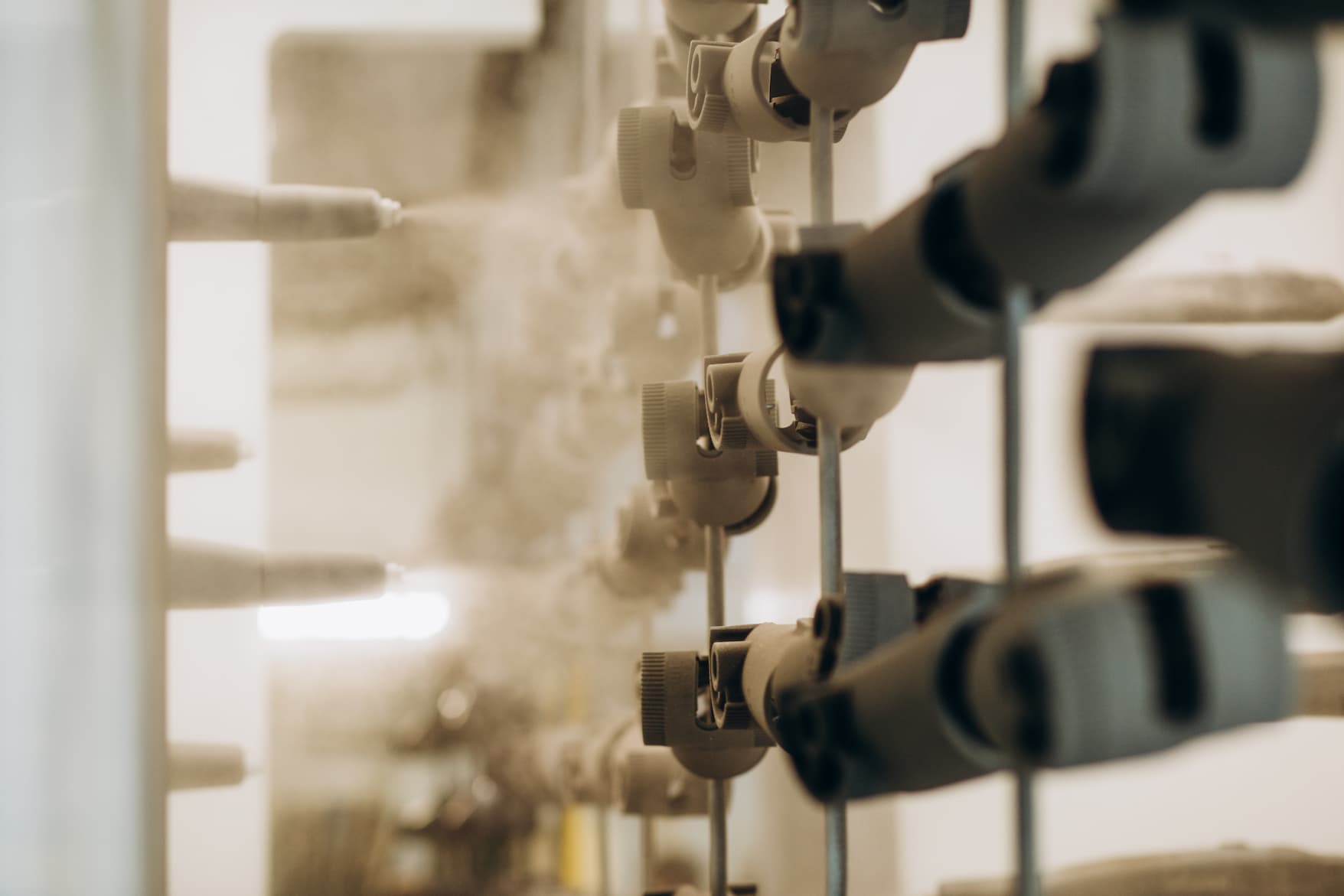
Powder coating is a dry finishing process in which finely ground particles of pigment and resin are electrostatically charged and sprayed onto a grounded metal surface. The charged particles adhere to the metal through electrostatic attraction, forming a uniform layer. The coated part is then moved into a curing oven, where heat causes the powder to melt, flow, and chemically cross-link into a hard, continuous film.
Unlike liquid paint, powder coating contains no solvents and releases virtually no volatile organic compounds (VOCs) during application. This makes it significantly more environmentally friendly and eliminates the health hazards associated with solvent-based coatings.
Why Powder Coat Aluminium?
Aluminium already resists corrosion through a thin, self-forming oxide layer. So why coat it? Several compelling reasons:
- Enhanced corrosion protection: While the natural oxide layer offers basic protection, it is thin and can be compromised in aggressive environments — coastal areas, industrial atmospheres, or chemical exposure. A properly applied powder coating adds 60–120 microns of additional barrier protection.
- UV resistance: Raw aluminium oxidises and dulls over time when exposed to sunlight. Powder coatings, especially polyester and super-durable polyester formulations, maintain colour stability and gloss for years of outdoor exposure.
- Aesthetic versatility: Powder coating is available in virtually unlimited RAL and custom colours, as well as textures (matte, satin, gloss, textured, metallic, and even wood-grain effects). This gives designers and architects enormous creative freedom.
- Mechanical durability: Cured powder coatings are significantly harder and more impact-resistant than most liquid paints. They resist scratching, chipping, and abrasion — critical for parts that undergo handling, assembly, or regular use.
- Cost efficiency: Overspray powder can be reclaimed and reused, yielding material utilisation rates of 95–98%. Combined with no solvent costs and lower waste disposal requirements, powder coating is often cheaper per square metre than liquid painting at production volumes.
The Powder Coating Process for Aluminium: Step by Step
Coating quality begins long before powder touches metal. Each step in the process directly affects adhesion, appearance, and durability:
Step 1: Surface Preparation (Pre-Treatment)
This is the most critical stage. Aluminium surfaces must be thoroughly cleaned and chemically treated to ensure proper adhesion. A typical pre-treatment line includes: alkaline degreasing to remove oils and contaminants, acid etching or deoxidising to remove the natural oxide layer and create a microscopically rough surface profile, chromate or chrome-free conversion coating (such as zirconium or titanium-based treatments) to promote adhesion and provide an additional corrosion barrier, and a deionised water rinse to remove residual chemicals.
Step 2: Drying
After pre-treatment, parts are dried thoroughly — either in an oven or with forced air — to ensure no moisture remains on the surface. Any trapped moisture will cause outgassing during curing, resulting in pinholes or bubbles in the coating.
Step 3: Powder Application
Dry powder is fed from a hopper through a spray gun that imparts an electrostatic charge to the particles. The charged powder is attracted to the grounded aluminium part, wrapping evenly around edges and into recesses. Robotic spray systems ensure consistent coverage and film thickness, especially on complex geometries.
Step 4: Curing
The coated parts enter a curing oven at temperatures typically between 160°C and 200°C for 10–20 minutes (metal temperature, not air temperature). This is where aluminium presents a unique consideration: its high thermal conductivity means parts heat up quickly, but also cool quickly — so oven temperature profiles must be carefully controlled to ensure the powder reaches full cure without under- or over-baking.
Step 5: Inspection and Quality Control
Cured parts are inspected for film thickness (typically 60–120 µm for architectural applications), adhesion (cross-hatch test), colour consistency, and surface defects. For outdoor applications, coatings must meet standards such as Qualicoat or GSB for proven long-term weather resistance.
Types of Powder Coatings Used on Aluminium
| Powder Type | Key Properties | Best Applications |
|---|---|---|
| Polyester | Excellent UV resistance, good flexibility, wide colour range | Architectural, outdoor furniture, facades, window frames |
| Super-durable polyester | Extended UV and weathering resistance (8–10+ years) | Building facades, signage, outdoor structures |
| Epoxy | Outstanding chemical and corrosion resistance, poor UV stability | Interior applications, functional/industrial parts, pipe coatings |
| Epoxy-polyester (hybrid) | Good balance of chemical resistance and aesthetics | Indoor furniture, electronics enclosures, shelving |
| Polyurethane | Smooth finish, excellent flow, chemical resistance | Automotive trim, high-end consumer products |
| Fluoropolymer (PVDF) | Superior weathering, colour retention up to 20+ years | Premium architectural facades, curtain walls |
Common Challenges When Powder Coating Aluminium
While powder coating is well-suited to aluminium, there are several challenges that require attention:
Outgassing
Cast aluminium and certain extruded alloys contain trapped gases in their porous structure. When heated during curing, these gases escape through the coating, creating pinholes or craters. Solutions include pre-baking the aluminium parts at curing temperature before powder application to drive out gases, and applying a dedicated outgassing primer before the topcoat.
Adhesion Failure
If the pre-treatment is insufficient or the aluminium surface is contaminated, the coating will delaminate over time — sometimes within weeks in demanding environments. Proper chemical pre-treatment is non-negotiable for long-term performance. Mechanical abrasion alone (sandblasting) is not a substitute for chemical conversion coatings on aluminium.
Colour Matching Across Batches
Achieving consistent colour across large production batches requires precise control of film thickness, curing temperature, and curing time. Even small variations — 10°C or 2 minutes — can shift the colour or gloss level noticeably, especially with metallic and special-effect powders.
Thermal Sensitivity
Some heat-treated aluminium alloys (6061-T6, 7075-T6) can lose temper strength if curing temperatures are too high or too prolonged. Low-bake powder formulations (curing at 150–160°C) are available for these applications but limit the choice of colour and finish.
Key takeaway: The success of powder coating on aluminium depends primarily on surface preparation. A well-prepared surface is responsible for approximately 80% of the coating’s long-term performance.
Quality Standards for Powder-Coated Aluminium
| Standard | Region | Focus |
|---|---|---|
| Qualicoat | Europe (primary) | Comprehensive quality label for powder-coated aluminium in architecture. Covers pre-treatment, application, curing, and testing. |
| GSB International | Europe / Worldwide | Quality mark for coated aluminium and steel. Defines quality classes (Standard, Premium, Master). |
| AAMA 2604 / 2605 | North America | Specifications for high-performance coatings on aluminium. 2605 is the most stringent for exterior use. |
| ISO 8501 / ISO 12944 | International | Surface preparation and corrosion protection standards applicable to coated metals. |
Powder Coating vs. Anodising Aluminium
Both powder coating and anodising are common finishes for aluminium, but they serve different purposes:
| Criteria | Powder Coating | Anodising |
|---|---|---|
| How it works | External coating applied on top of the surface | Electrochemical process that grows the oxide layer into the aluminium |
| Thickness | 60–120 µm (adds material) | 5–25 µm (partially penetrates the surface) |
| Colour range | Virtually unlimited (RAL, custom, texture effects) | Limited (natural, black, bronze, a few colours) |
| Touch-up / repair | Possible (spot repair or recoat) | Not repairable — requires full re-anodising |
| Cost | Lower for most applications | Higher, especially for large parts |
| Best for | Colour diversity, cost efficiency, industrial applications | Natural metallic look, hard-wearing surfaces, architectural premium finishes |
Environmental and Health Advantages
Powder coating is one of the most environmentally responsible finishing methods available. It produces near-zero VOC emissions, requires no solvent use or disposal, allows up to 98% powder reclamation and reuse, and generates minimal hazardous waste compared to liquid painting operations. For manufacturers pursuing ISO 14001 certification or looking to meet increasingly strict European environmental regulations, powder coating aligns naturally with sustainability goals.
Conclusion
Powder coating aluminium delivers a winning combination of durability, aesthetics, and environmental responsibility. When done correctly — with thorough surface preparation, proper powder selection, and controlled curing — the result is a finish that protects the underlying metal for years while offering virtually unlimited colour and texture options. The key to success lies in partnering with a coater who understands the specific requirements of aluminium and maintains rigorous process control from pre-treatment through final inspection.
At toLav, our robotic powder coating line is purpose-built for consistent, high-quality results on aluminium and steel components. From single-colour production runs to complex multi-coat finishes, we control every step of the process in-house — ensuring that the parts we deliver meet the performance and appearance standards our European clients demand.
Looking for a reliable powder coating partner for your aluminium parts? Contact us to discuss your finish requirements and request a sample.